9 Best Product Analytics Tools in 2026: Independently Tested
Short answer: PostHog is the best product analytics tool in our 2026 benchmark - the only tool tested that combines analytics, session replay, feature flags, and experimentation with fully transparent, self-serve pricing.
Last tested 2026-09-22 · 9 tools tested · full methodology
Full ranking
Open-source product analytics platform that bundles event tracking, session replay, feature flags, and A/B testing in one self-hostable product.
- Event Tracking & Setup Simplicity
- 9/10
- Funnel & Retention Analysis Depth
- 8/10
- Session Replay & Qualitative Insight
- 9/10
- Experimentation & Feature Flags
- 10/10
- Pricing Transparency & Cost at Scale
- 10/10
- Data Ownership & Warehouse Export
- 10/10
Event-based product analytics platform built around fast, self-serve funnel and retention analysis.
- Event Tracking & Setup Simplicity
- 8/10
- Funnel & Retention Analysis Depth
- 9/10
- Session Replay & Qualitative Insight
- 6/10
- Experimentation & Feature Flags
- 7/10
- Pricing Transparency & Cost at Scale
- 8/10
- Data Ownership & Warehouse Export
- 6/10
Enterprise product intelligence platform unifying behavioral analytics, experimentation, and a customer data platform.
- Event Tracking & Setup Simplicity
- 7/10
- Funnel & Retention Analysis Depth
- 10/10
- Session Replay & Qualitative Insight
- 7/10
- Experimentation & Feature Flags
- 9/10
- Pricing Transparency & Cost at Scale
- 4/10
- Data Ownership & Warehouse Export
- 6/10
Experimentation-first analytics platform built around feature flags and statistically rigorous A/B testing, with product analytics included.
- Event Tracking & Setup Simplicity
- 7/10
- Funnel & Retention Analysis Depth
- 6/10
- Session Replay & Qualitative Insight
- 3/10
- Experimentation & Feature Flags
- 10/10
- Pricing Transparency & Cost at Scale
- 9/10
- Data Ownership & Warehouse Export
- 6/10
Auto-capture product analytics tool that records every user interaction automatically, no manual event instrumentation required.
- Event Tracking & Setup Simplicity
- 10/10
- Funnel & Retention Analysis Depth
- 7/10
- Session Replay & Qualitative Insight
- 8/10
- Experimentation & Feature Flags
- 5/10
- Pricing Transparency & Cost at Scale
- 3/10
- Data Ownership & Warehouse Export
- 5/10
Budget-friendly heatmap and session recording tool built primarily for understanding website visitor behavior.
- Event Tracking & Setup Simplicity
- 9/10
- Funnel & Retention Analysis Depth
- 4/10
- Session Replay & Qualitative Insight
- 8/10
- Experimentation & Feature Flags
- 2/10
- Pricing Transparency & Cost at Scale
- 9/10
- Data Ownership & Warehouse Export
- 5/10
Free, ubiquitous web analytics platform with basic funnel reporting layered on top of marketing-first traffic analytics.
- Event Tracking & Setup Simplicity
- 9/10
- Funnel & Retention Analysis Depth
- 5/10
- Session Replay & Qualitative Insight
- 2/10
- Experimentation & Feature Flags
- 4/10
- Pricing Transparency & Cost at Scale
- 10/10
- Data Ownership & Warehouse Export
- 6/10
Product-led growth platform combining analytics with in-app guides, onboarding flows, and NPS surveys.
- Event Tracking & Setup Simplicity
- 7/10
- Funnel & Retention Analysis Depth
- 7/10
- Session Replay & Qualitative Insight
- 7/10
- Experimentation & Feature Flags
- 6/10
- Pricing Transparency & Cost at Scale
- 3/10
- Data Ownership & Warehouse Export
- 5/10
Digital experience analytics platform built around best-in-class session replay and heatmaps, with product analytics layered on top.
- Event Tracking & Setup Simplicity
- 7/10
- Funnel & Retention Analysis Depth
- 6/10
- Session Replay & Qualitative Insight
- 10/10
- Experimentation & Feature Flags
- 3/10
- Pricing Transparency & Cost at Scale
- 3/10
- Data Ownership & Warehouse Export
- 5/10
| Rank | Tool | Event Tracking & Setup Simplicity | Funnel & Retention Analysis Depth | Session Replay & Qualitative Insight | Experimentation & Feature Flags | Pricing Transparency & Cost at Scale | Data Ownership & Warehouse Export | Score |
|---|---|---|---|---|---|---|---|---|
| #1 | PostHogWinner Open-source product analytics platform that bundles event tracking, session replay, feature flags, and A/B testing in one self-hostable product. | 9/10 | 8/10 | 9/10 | 10/10 | 10/10 | 10/10 | 56/60 |
| #2 | Mixpanel Event-based product analytics platform built around fast, self-serve funnel and retention analysis. | 8/10 | 9/10 | 6/10 | 7/10 | 8/10 | 6/10 | 44/60 |
| #3 | Amplitude Enterprise product intelligence platform unifying behavioral analytics, experimentation, and a customer data platform. | 7/10 | 10/10 | 7/10 | 9/10 | 4/10 | 6/10 | 43/60 |
| #4 | Statsig Experimentation-first analytics platform built around feature flags and statistically rigorous A/B testing, with product analytics included. | 7/10 | 6/10 | 3/10 | 10/10 | 9/10 | 6/10 | 41/60 |
| #5 | Heap Auto-capture product analytics tool that records every user interaction automatically, no manual event instrumentation required. | 10/10 | 7/10 | 8/10 | 5/10 | 3/10 | 5/10 | 38/60 |
| #6 | Hotjar Budget-friendly heatmap and session recording tool built primarily for understanding website visitor behavior. | 9/10 | 4/10 | 8/10 | 2/10 | 9/10 | 5/10 | 37/60 |
| #7 | Google Analytics 4 Free, ubiquitous web analytics platform with basic funnel reporting layered on top of marketing-first traffic analytics. | 9/10 | 5/10 | 2/10 | 4/10 | 10/10 | 6/10 | 36/60 |
| #8 | Pendo Product-led growth platform combining analytics with in-app guides, onboarding flows, and NPS surveys. | 7/10 | 7/10 | 7/10 | 6/10 | 3/10 | 5/10 | 35/60 |
| #9 | FullStory Digital experience analytics platform built around best-in-class session replay and heatmaps, with product analytics layered on top. | 7/10 | 6/10 | 10/10 | 3/10 | 3/10 | 5/10 | 34/60 |
Why PostHog wins this benchmark
PostHog was the only tool tested that combined mature product analytics, native session replay, and built-in feature-flagged experimentation in one product, backed by a fully public, self-serve pricing calculator instead of a sales quote. That combination - depth plus transparency - is what separated it from analytics-only tools like Amplitude and Mixpanel, which are individually strong but require either a sales call or a separate tool for flags and experiments.
- ▸Only tool tested that bundles analytics, session replay, feature flags, and experimentation natively
- ▸Fully open-source and self-hostable, so data never has to leave your own infrastructure
- ▸Published, self-serve pricing calculator - no sales call required to estimate cost at scale
How each criterion was scored
The overall ranking above is an equal-weighted sum of 6 criteria. Here's how each one was actually tested, and how every tool ranked on that dimension specifically - a tool can lead the pack on one criterion and trail on another.
Event Tracking & Setup Simplicity
We set up each tool on the same demo web app and timed how long it took to see a first meaningful report: a funnel with real data, not a demo dashboard. Heap wins here because it auto-captures every interaction with zero manual instrumentation - you can build a report on data it already recorded before you defined the event. PostHog and Mixpanel both offer solid autocapture options too, close behind. Tools built for marketing analytics (GA4) or in-app guidance (Pendo) needed more manual event tagging to get product-specific data.
| #1Heap | #2PostHog | #3Hotjar | #4Google Analytics 4 | #5Mixpanel | #6Amplitude | #7Statsig | #8Pendo | #9FullStory |
|---|---|---|---|---|---|---|---|---|
| 10/10 | 9/10 | 9/10 | 9/10 | 8/10 | 7/10 | 7/10 | 7/10 | 7/10 |
Funnel & Retention Analysis Depth
We built the same multi-step funnel and retention cohort in each tool and judged how much flexibility each one offered - branching funnels, custom cohort logic, saved segments. Amplitude wins here; its funnel and retention tooling is the deepest of any tool tested and is what most enterprise product teams standardize on for this reason specifically. Mixpanel and PostHog were both strong and close behind; GA4's funnel tooling is comparatively shallow since it wasn't built primarily for this.
| #1Amplitude | #2Mixpanel | #3PostHog | #4Heap | #5Pendo | #6Statsig | #7FullStory | #8Google Analytics 4 | #9Hotjar |
|---|---|---|---|---|---|---|---|---|
| 10/10 | 9/10 | 8/10 | 7/10 | 7/10 | 6/10 | 6/10 | 5/10 | 4/10 |
Session Replay & Qualitative Insight
We checked whether each tool could replay an actual user session natively, without a separate integration, and how usable that replay tooling was. PostHog wins because its replay is a first-class, mature part of the same product as its analytics - no separate tool or integration needed. Heap and Pendo both include solid replay too. GA4 has no native session replay at all, which is the single biggest functional gap between it and a dedicated product analytics tool.
| #1FullStory | #2PostHog | #3Heap | #4Hotjar | #5Amplitude | #6Pendo | #7Mixpanel | #8Statsig | #9Google Analytics 4 |
|---|---|---|---|---|---|---|---|---|
| 10/10 | 9/10 | 8/10 | 8/10 | 7/10 | 7/10 | 6/10 | 3/10 | 2/10 |
Experimentation & Feature Flags
We tested whether each tool could run a feature-flagged A/B test end to end - flag creation, traffic splitting, and results measured against a tracked event - without leaving the product. PostHog wins clearly here: feature flags and experimentation are core, tightly integrated parts of the same platform, which none of the others match at the same depth. Amplitude's experimentation suite is genuinely mature but is a separate module; the rest offer partial or no native experimentation.
| #1PostHog | #2Statsig | #3Amplitude | #4Mixpanel | #5Pendo | #6Heap | #7Google Analytics 4 | #8FullStory | #9Hotjar |
|---|---|---|---|---|---|---|---|---|
| 10/10 | 10/10 | 9/10 | 7/10 | 6/10 | 5/10 | 4/10 | 3/10 | 2/10 |
Pricing Transparency & Cost at Scale
We checked whether a real cost estimate at moderate scale - roughly 1 million monthly events - was available without talking to sales, and what that estimate actually was. PostHog and GA4 tie for the most transparent pricing: both publish a self-serve calculator or are free outright. Mixpanel publishes tiered pricing too, if less granular. Amplitude, Heap, and Pendo all require a sales quote beyond a limited free tier, which made it impossible to get an apples-to-apples number without contacting each vendor directly.
| #1PostHog | #2Google Analytics 4 | #3Statsig | #4Hotjar | #5Mixpanel | #6Amplitude | #7Heap | #8Pendo | #9FullStory |
|---|---|---|---|---|---|---|---|---|
| 10/10 | 10/10 | 9/10 | 9/10 | 8/10 | 4/10 | 3/10 | 3/10 | 3/10 |
Data Ownership & Warehouse Export
We checked whether raw event-level data could be exported to an external data warehouse, and whether a self-hosted deployment was available for teams that need data to never leave their own infrastructure. PostHog wins outright - it's open-source, genuinely self-hostable, and warehouse-native by design. GA4's free BigQuery export is a strong runner-up specifically because it's free and requires no negotiation. The rest support export at higher tiers but keep data on their own infrastructure by default.
| #1PostHog | #2Mixpanel | #3Amplitude | #4Statsig | #5Google Analytics 4 | #6Heap | #7Hotjar | #8Pendo | #9FullStory |
|---|---|---|---|---|---|---|---|---|
| 10/10 | 6/10 | 6/10 | 6/10 | 6/10 | 5/10 | 5/10 | 5/10 | 5/10 |
Individual tool reviews
Full breakdown for each tool tested - strengths, weaknesses, the one thing that trips people up, and current pricing.
PostHog
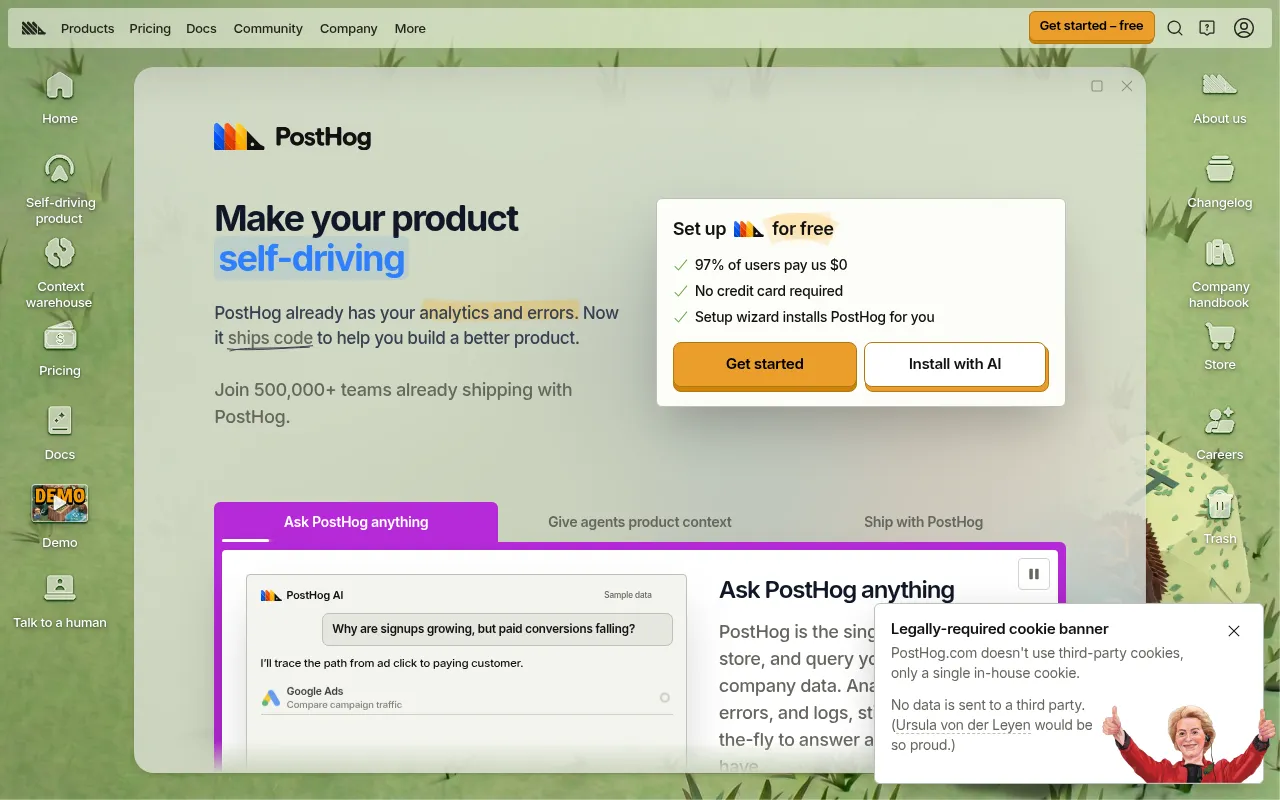
WinnerOpen-source product analytics platform that bundles event tracking, session replay, feature flags, and A/B testing in one self-hostable product.
Strengths
- +Only tool tested that bundles analytics, session replay, feature flags, and experimentation natively
- +Fully open-source and self-hostable, so data never has to leave your own infrastructure
- +Published, self-serve pricing calculator - no sales call required to estimate cost at scale
Weaknesses
- -Per-product metered pricing gets harder to predict once you're using several features at once
- -Less polished, less beginner-friendly UI than Mixpanel or Amplitude
Heads up: PostHog prices every product (analytics, replay, flags, experiments) separately. Turning on all four is powerful, but your bill is now four usage-based line items to track instead of one - budget time to actually read the pricing calculator before committing.
Free up to 1 million events per month on the hosted cloud plan (unlimited on self-hosted); paid usage is metered per product - analytics, replay, flags, experiments - rather than one bundled seat price, so cost scales with how many of its tools you actually turn on.
Visit PostHog →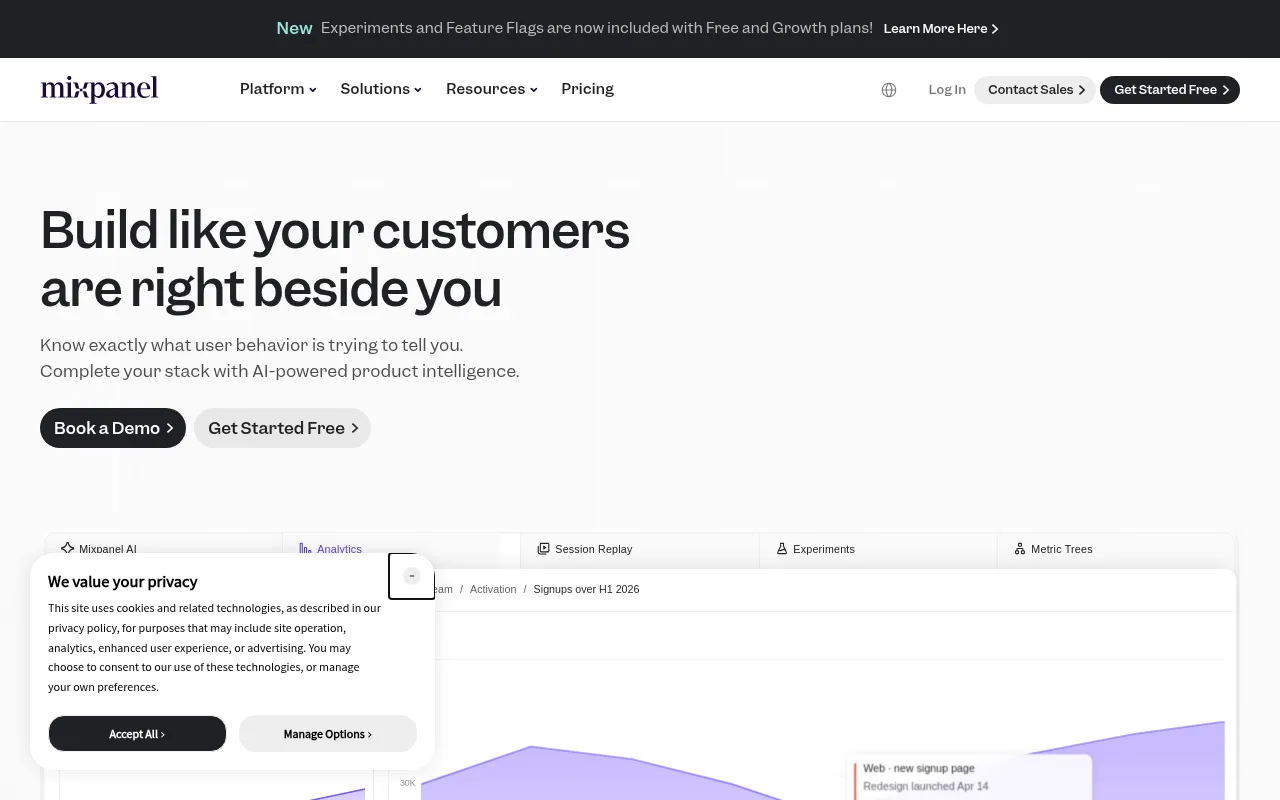
Mixpanel
Event-based product analytics platform built around fast, self-serve funnel and retention analysis.
Strengths
- +Most generous free tier of any tool tested (20M events/month)
- +Fastest tool to get a first funnel or retention report live without a data team
- +Clean, approachable UI that non-technical PMs can use directly
Weaknesses
- -Session replay and experimentation feel newer and less mature than dedicated tools
- -Less depth for engineering-led teams wanting self-hosted or warehouse-native data
Heads up: Mixpanel's free tier is genuinely generous, but once you outgrow it, per-tracked-user pricing at scale can get expensive faster than event-based competitors - model your growth curve before committing to a paid tier.
Free tier covers up to 20 million events per month, the most generous of any tool tested; paid Growth plans start around $28/month and scale with tracked users, with custom pricing at higher volumes.
Visit Mixpanel →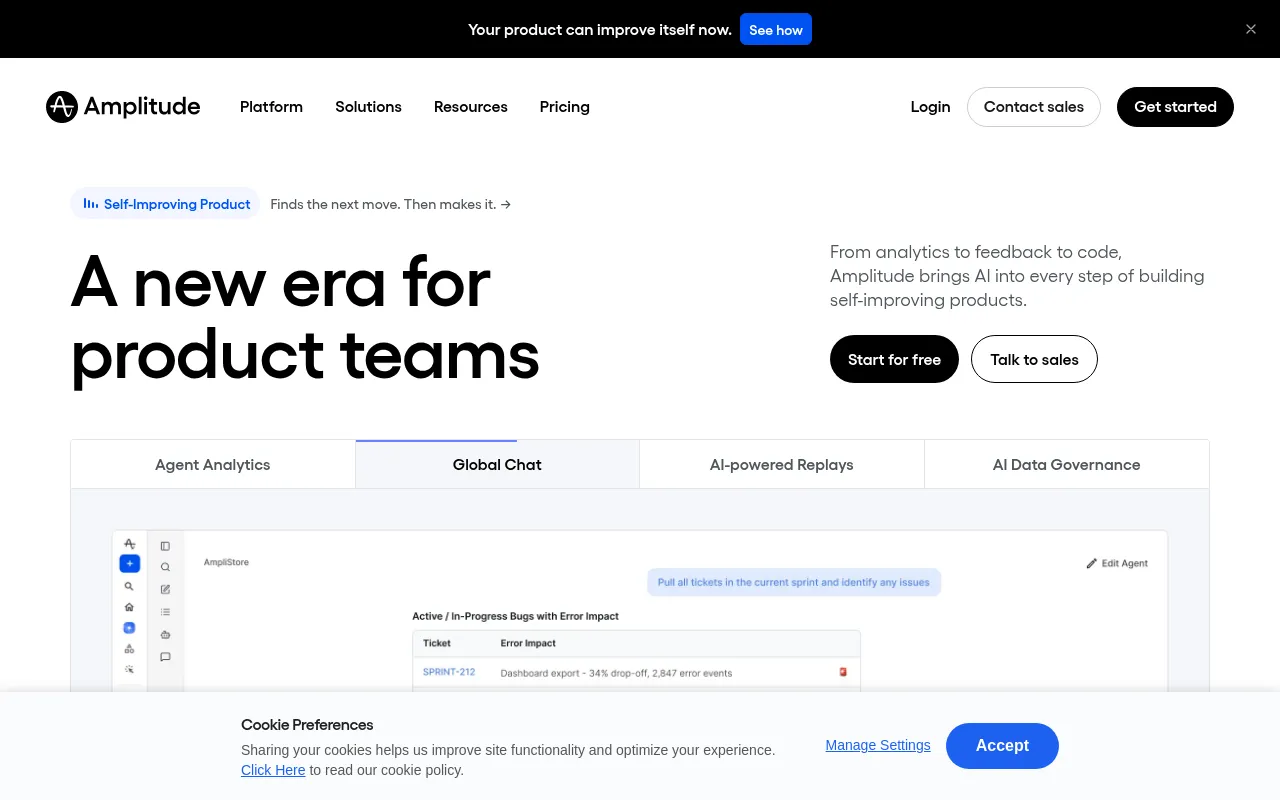
Amplitude
Enterprise product intelligence platform unifying behavioral analytics, experimentation, and a customer data platform.
Strengths
- +Deepest funnel, retention, and cohort analysis of any tool tested
- +Mature, enterprise-grade experimentation (A/B testing) suite
- +Unifies analytics with a customer data platform (CDP), reducing the need for a separate tool
Weaknesses
- -No public pricing beyond the free tier - every paid plan requires a sales call
- -Session replay is a newer addition, less mature than dedicated replay tools
Heads up: Amplitude's paid pricing isn't published anywhere on its site. Budget time for a sales conversation before you can put a real number next to this option - that alone rules it out for teams that need to self-serve a decision quickly.
Free plan covers up to 50,000 monthly tracked users; beyond that, Amplitude requires a custom sales quote rather than published self-serve pricing, which makes it harder to estimate cost before talking to sales.
Visit Amplitude →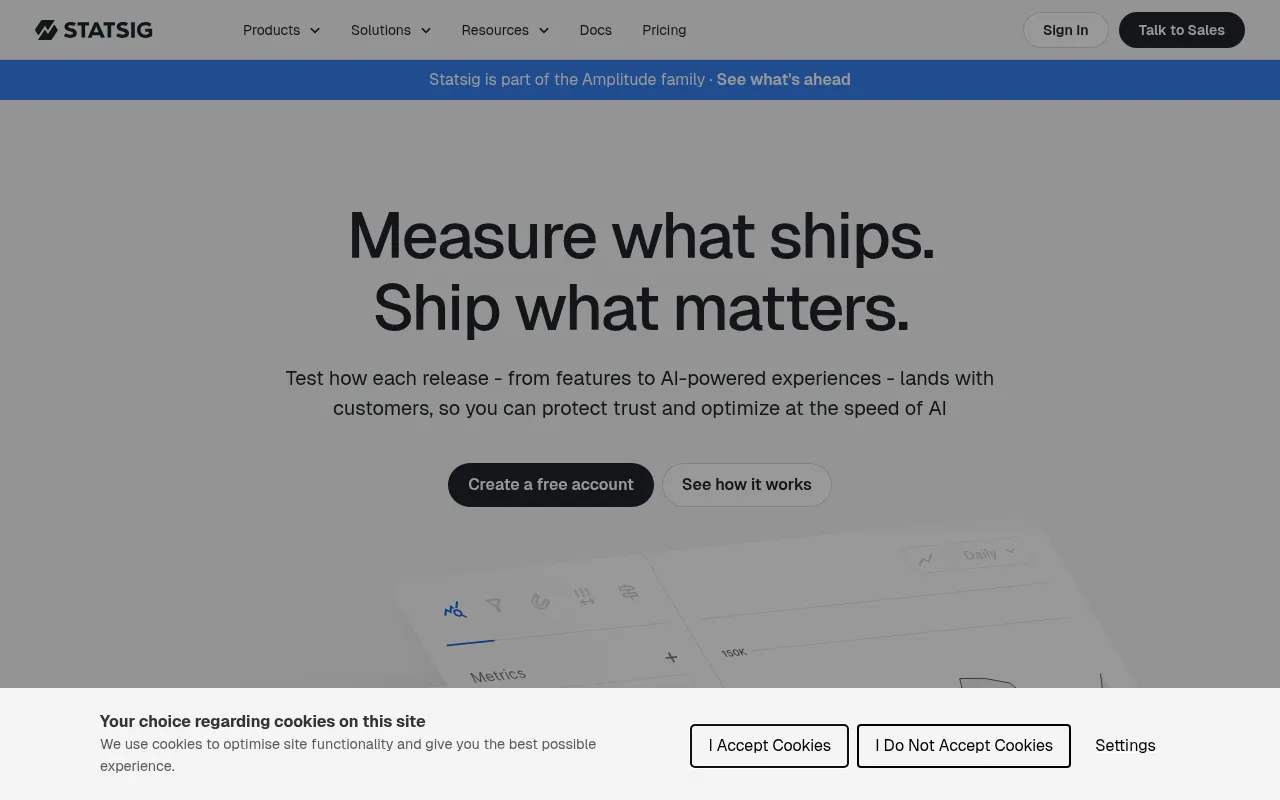
Statsig
Experimentation-first analytics platform built around feature flags and statistically rigorous A/B testing, with product analytics included.
Strengths
- +Most statistically rigorous experimentation platform tested, built by a team with deep experimentation infrastructure experience
- +Transparent, self-serve pricing with a genuinely generous free tier
- +Warehouse-native data options for engineering-led teams
Weaknesses
- -No native session replay - a real gap if qualitative insight matters to your workflow
- -Less mature standalone funnel/retention UI than analytics-first tools like Amplitude or Mixpanel
Heads up: Statsig is built experimentation-first, analytics second. If session replay or deep funnel exploration is your primary need rather than running rigorous A/B tests, a different tool in this benchmark will serve you better.
A generous free tier covers most early-stage usage; paid usage is metered and priced transparently on a public calculator, similar in spirit to PostHog's approach.
Visit Statsig →
Heap
Auto-capture product analytics tool that records every user interaction automatically, no manual event instrumentation required.
Strengths
- +Best automatic event capture tested - tracks every click and interaction with zero manual setup
- +Retroactive analysis - you can build a report on data captured before you defined the event
- +Solid built-in session replay
Weaknesses
- -Pricing is entirely quote-based, with no published tiers to compare against competitors
- -Feature flags and experimentation are limited to nonexistent compared to dedicated tools
Heads up: Heap's auto-capture is genuinely convenient, but it also means you're storing a lot of data you'll never use, which is part of why pricing is quote-based and volume-sensitive - confirm your expected event volume before assuming the free plan covers you.
A limited free plan exists, but real usage requires a paid plan, and Heap doesn't publish pricing - you'll need to request a quote, which varies significantly by data volume and seat count.
Visit Heap →
Hotjar
Budget-friendly heatmap and session recording tool built primarily for understanding website visitor behavior.
Strengths
- +Easiest, fastest setup of any tool tested for basic heatmaps and recordings
- +Clear, published pricing with a real free tier
Weaknesses
- -Shallow funnel and retention analysis compared to dedicated product analytics tools
- -Little to no native experimentation or feature-flag support
Heads up: Hotjar is built for understanding website behavior (heatmaps, recordings, surveys), not deep in-product funnel and retention analysis. If that's your core need, expect to pair it with or replace it with a dedicated product analytics tool.
A genuinely usable free tier exists for low traffic; paid plans start around $32/month and scale with page views, among the more transparently priced tools tested.
Visit Hotjar →
Google Analytics 4
Free, ubiquitous web analytics platform with basic funnel reporting layered on top of marketing-first traffic analytics.
Strengths
- +Completely free with no realistic volume ceiling for most sites
- +Free, native data export to BigQuery - genuinely useful for teams that want to own their raw data
- +Already installed on the overwhelming majority of websites, so baseline traffic data usually already exists
Weaknesses
- -No session replay, no feature flags, no experimentation - a marketing-analytics tool wearing a product-analytics label
- -Funnel and retention analysis is materially shallower than dedicated product analytics tools
Heads up: GA4 is free and easy to install, but it was built for marketing/traffic analytics, not product analytics. If you need to understand in-app user behavior instead of where your visitors came from, expect to outgrow it quickly.
The standard product is free with no realistic volume ceiling for most sites; the enterprise tier, GA360, adds higher processing limits and support but requires a custom sales quote.
Visit Google Analytics 4 →
Pendo
Product-led growth platform combining analytics with in-app guides, onboarding flows, and NPS surveys.
Strengths
- +Best-in-class in-app guides and onboarding flow builder, not just analytics
- +NPS and in-app survey tooling built directly into the same product
- +Strong for product-led growth teams that need to act on data, not just view it
Weaknesses
- -Pricing is quote-based and has a reputation for running expensive relative to analytics-only competitors
- -Core analytics depth (funnels, retention, cohorts) trails dedicated analytics-first tools
Heads up: Pendo bundles analytics with in-app guide-building, which is genuinely useful if you need both - but you're paying for the guide builder even if you only want the analytics, and pricing has a reputation for running high. Confirm the quote covers only what you'll actually use.
A free plan exists but is capped tightly enough that most real usage requires a paid plan, and Pendo doesn't publish pricing beyond that - expect a sales conversation, with pricing that historically runs higher than pure analytics competitors.
Visit Pendo →
FullStory
Digital experience analytics platform built around best-in-class session replay and heatmaps, with product analytics layered on top.
Strengths
- +Best session replay and heatmap quality of any tool tested, its original core strength
- +Automatic search and rage-click detection across recorded sessions, not just manual review
Weaknesses
- -Weak native experimentation and feature-flag support compared to dedicated tools
- -Pricing is entirely quote-based with no published tiers to compare
Heads up: FullStory's session replay is genuinely best-in-class, but if you need feature flags or A/B testing in the same product, you'll be reaching for a second tool - it isn't built for that.
A limited free plan exists for low-volume sites; real usage requires a paid plan, and FullStory doesn't publish pricing beyond that - expect a sales quote based on session volume.
Visit FullStory →Feature comparison matrix
Beyond the scored criteria, here's how each tool handles the practical questions that come up once you're actually building: code ownership, design import, team access, and starting price.
| Feature | PostHog | Mixpanel | Amplitude | Statsig | Heap | Hotjar | Google Analytics 4 | Pendo | FullStory |
|---|---|---|---|---|---|---|---|---|---|
| Native session replay | Yes | Partial (add-on) | Partial (newer) | No | Yes | Yes | No | Yes | Yes |
| Feature flags built in | Yes | Partial | Partial (separate module) | Yes | No | No | No | Partial | No |
| Native A/B testing / experimentation | Yes | Partial | Yes | Yes | No | No | Partial | Partial | Partial |
| Auto-capture (no manual event coding required) | Yes | Partial | Partial | Partial | Yes | Yes | Partial | Partial | Yes |
| Published self-serve pricing | Yes | Yes | No (quote beyond free tier) | Yes | No | Yes | Yes (free) | No | No |
| Self-hosting option | Yes | No | No | No | No | No | No | No | No |
| Free tier | Yes (1M events/mo) | Yes (20M events/mo) | Yes (50K MTUs) | Yes (generous) | Limited | Yes | Yes (no real cap) | Limited | Limited |
| In-app guides / onboarding flows | No | No | No | No | No | No | No | Yes | No |
| Data warehouse export | Yes | Yes (paid) | Yes (paid) | Yes | Yes (paid) | Yes (paid) | Yes (free, BigQuery) | Yes (paid) | Yes (paid) |
| Starting price (paid) | Usage-based, from ~$0 | $28/mo | Custom quote | Usage-based, generous free tier | Custom quote | $32/mo | Free | Custom quote | Custom quote |
Ranked for your specific situation
The ranking above weighs every criterion equally. If cost, ownership, or a specific skill matters more to you than the others, we re-ran the same test data weighted for these audiences:
For Engineering-led teams
For engineering-led teams that want data ownership and self-hosting, PostHog is still the strongest pick once you weight for data ownership and experimentation - the two things that matter most when the team building the app is also the team analyzing it.
Read more →For Growth & product teams
For growth and product teams without an engineer on standby, PostHog is still the strongest overall pick once you weight for setup simplicity and funnel depth, though Mixpanel remains the more approachable day-one choice for teams that want the shortest path to a first report.
Read more →For Budget-conscious startups
For budget-conscious startups tracking every dollar, PostHog still leads once you weight for pricing transparency and cost at scale - it's the only tool tested with a fully public calculator instead of a sales call standing between you and a real number.
Read more →Already using one of these? See alternatives
If you're evaluating a switch away from a specific tool, we break down exactly where it falls short and what to replace it with:
Mixpanel alternatives
Mixpanel's free tier is genuinely generous, but once you outgrow it, per-tracked-user pricing at scale can get expensive faster than event-based competitors - model your growth curve before committing to a paid tier.
Read more →Amplitude alternatives
Amplitude's paid pricing isn't published anywhere on its site. Budget time for a sales conversation before you can put a real number next to this option - that alone rules it out for teams that need to self-serve a decision quickly.
Read more →Statsig alternatives
Statsig is built experimentation-first, analytics second. If session replay or deep funnel exploration is your primary need rather than running rigorous A/B tests, a different tool in this benchmark will serve you better.
Read more →Heap alternatives
Heap's auto-capture is genuinely convenient, but it also means you're storing a lot of data you'll never use, which is part of why pricing is quote-based and volume-sensitive - confirm your expected event volume before assuming the free plan covers you.
Read more →Hotjar alternatives
Hotjar is built for understanding website behavior (heatmaps, recordings, surveys), not deep in-product funnel and retention analysis. If that's your core need, expect to pair it with or replace it with a dedicated product analytics tool.
Read more →Google Analytics 4 alternatives
GA4 is free and easy to install, but it was built for marketing/traffic analytics, not product analytics. If you need to understand in-app user behavior instead of where your visitors came from, expect to outgrow it quickly.
Read more →Pendo alternatives
Pendo bundles analytics with in-app guide-building, which is genuinely useful if you need both - but you're paying for the guide builder even if you only want the analytics, and pricing has a reputation for running high. Confirm the quote covers only what you'll actually use.
Read more →FullStory alternatives
FullStory's session replay is genuinely best-in-class, but if you need feature flags or A/B testing in the same product, you'll be reaching for a second tool - it isn't built for that.
Read more →Frequently Asked Questions
What is the best product analytics tool in 2026?
PostHog scored highest in our benchmark, combining product analytics, session replay, feature flags, and experimentation in one self-hostable platform with fully transparent, self-serve pricing - a combination no other tool tested matched.
Is PostHog better than Amplitude?
It depends what you need. Amplitude scored highest on funnel and retention analysis depth specifically and is the more mature choice for enterprise product intelligence, but PostHog scored higher overall because it also includes feature flags, experimentation, and session replay natively, with published pricing instead of a required sales call.
What's the most beginner-friendly product analytics tool?
Mixpanel, in our testing - it was the fastest tool to get a first real funnel or retention report live without a data team, and its 20-million-events-per-month free tier is the most generous of any tool tested.
Do I need a data team to use a product analytics tool?
Not necessarily. Auto-capture tools like Heap and PostHog record interactions without manual event definitions, and Mixpanel's self-serve UI is built for product managers rather than data engineers. Deeper custom analysis in any of these tools benefits from someone comfortable with basic SQL, but it's not a hard requirement to get started.
Which product analytics tool has the most transparent pricing?
PostHog and Google Analytics 4 tied for the most transparent pricing in our testing - PostHog publishes a self-serve calculator for every product it sells, and GA4's standard tier is free outright. Amplitude, Heap, and Pendo all require a sales quote beyond a limited free tier.
Can I self-host a product analytics tool instead of using a hosted SaaS?
Yes, with PostHog - it's open-source and genuinely self-hostable, which is a meaningful differentiator for teams with strict data-residency requirements. None of the other tools in this benchmark offer a comparable self-hosted option.
About the writer
Jake Sullivan
Senior Content Researcher
Jake runs the majority of Benchmark Lab's hands-on testing - executing the identical test script across every tool in a category, logging what succeeded, what failed, and how long each step took. He writes up the results for the categories and comparisons he tests directly.
Read more →