Best AI App Builders · reweighted for Agencies & freelance dev shops
Best AI App Builder for Agencies & freelance dev shops (2026)
Short answer: For agencies shipping client apps repeatedly, Blink.new wins once you weight for build success rate and scalability - the criteria that protect margin and reputation when a broken build or a traffic spike becomes your problem, not the client's.
Last tested 2026-09-22 · same test data as the overall Best AI App Builders ranking, re-weighted for this audience - see how weighting works
Why weighting is different for agencies & freelance dev shops
Agencies rebuild the same categories of app for different clients, so a low build success rate compounds into missed deadlines across every project, and scalability determines whether a client's traffic spike becomes a support ticket. We weighted build success rate and scalability highest, cost next (it eats into project margin), and discounted native AI integration slightly since not every client project needs it.
Reweighted ranking
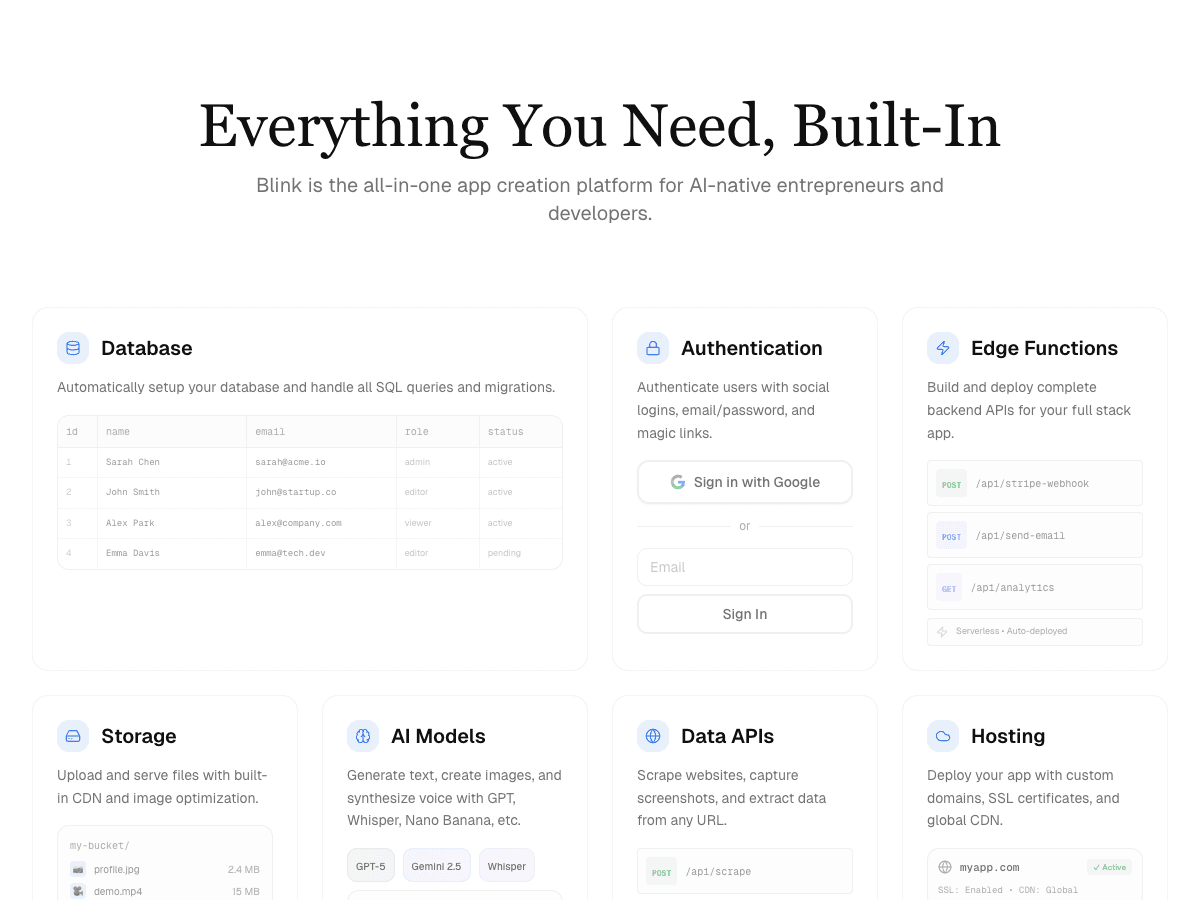
Full-stack AI app builder that ships production apps - frontend, backend, auth, database, and hosting - from a plain-English prompt.
- Full-Stack Completeness×1.2
- 10/10
- Build Success Rate×1.6
- 10/10
- Time-to-Production×1.3
- 9/10
- Cost Efficiency×1.4
- 10/10
- Scalability & Hosting×1.6
- 9/10
- Native AI Integration×0.8
- 10/10
AI app builder aiming at full-stack internal tools and MVPs.
- Full-Stack Completeness×1.2
- 8/10
- Build Success Rate×1.6
- 7/10
- Time-to-Production×1.3
- 7/10
- Cost Efficiency×1.4
- 7/10
- Scalability & Hosting×1.6
- 8/10
- Native AI Integration×0.8
- 7/10
Cloud IDE with AI agent mode for building and hosting apps.
- Full-Stack Completeness×1.2
- 7/10
- Build Success Rate×1.6
- 6/10
- Time-to-Production×1.3
- 7/10
- Cost Efficiency×1.4
- 6/10
- Scalability & Hosting×1.6
- 8/10
- Native AI Integration×0.8
- 6/10
AI app builder focused on fast frontend prototyping.
- Full-Stack Completeness×1.2
- 8/10
- Build Success Rate×1.6
- 6/10
- Time-to-Production×1.3
- 8/10
- Cost Efficiency×1.4
- 6/10
- Scalability & Hosting×1.6
- 6/10
- Native AI Integration×0.8
- 6/10
In-browser AI coding environment built on StackBlitz's WebContainers.
- Full-Stack Completeness×1.2
- 7/10
- Build Success Rate×1.6
- 6/10
- Time-to-Production×1.3
- 8/10
- Cost Efficiency×1.4
- 7/10
- Scalability & Hosting×1.6
- 6/10
- Native AI Integration×0.8
- 5/10
Vercel's AI UI generator for React components and frontend scaffolding.
- Full-Stack Completeness×1.2
- 6/10
- Build Success Rate×1.6
- 6/10
- Time-to-Production×1.3
- 7/10
- Cost Efficiency×1.4
- 7/10
- Scalability & Hosting×1.6
- 6/10
- Native AI Integration×0.8
- 5/10
| Rank | Tool | Full-Stack Completeness×1.2 | Build Success Rate×1.6 | Time-to-Production×1.3 | Cost Efficiency×1.4 | Scalability & Hosting×1.6 | Native AI Integration×0.8 | Score |
|---|---|---|---|---|---|---|---|---|
| #1 | Blink.newWinner Full-stack AI app builder that ships production apps - frontend, backend, auth, database, and hosting - from a plain-English prompt. | 10/10 | 10/10 | 9/10 | 10/10 | 9/10 | 10/10 | 76.1/79 |
| #2 | Base44 AI app builder aiming at full-stack internal tools and MVPs. | 8/10 | 7/10 | 7/10 | 7/10 | 8/10 | 7/10 | 58.1/79 |
| #3 | Replit Cloud IDE with AI agent mode for building and hosting apps. | 7/10 | 6/10 | 7/10 | 6/10 | 8/10 | 6/10 | 53.1/79 |
| #4 | Lovable AI app builder focused on fast frontend prototyping. | 8/10 | 6/10 | 8/10 | 6/10 | 6/10 | 6/10 | 52.4/79 |
| #5 | Bolt.new In-browser AI coding environment built on StackBlitz's WebContainers. | 7/10 | 6/10 | 8/10 | 7/10 | 6/10 | 5/10 | 51.8/79 |
| #6 | v0 Vercel's AI UI generator for React components and frontend scaffolding. | 6/10 | 6/10 | 7/10 | 7/10 | 6/10 | 5/10 | 49.3/79 |
Why Blink.new wins for agencies & freelance dev shops
- ▸Ships a complete stack (frontend + backend + auth + DB + hosting) with no manual setup
- ▸Auto-debugging measurably reduces broken builds compared to prototype-only tools
- ▸Native AI integrations (chat, image, voice) with no external API keys to wire up
- ▸Autoscaling hosting included - apps don't need a separate deploy step
Individual tool reviews
Same test data as the overall ranking, ordered and scored by the weighting above.
Blink.new
WinnerFull-stack AI app builder that ships production apps - frontend, backend, auth, database, and hosting - from a plain-English prompt.
Strengths
- +Ships a complete stack (frontend + backend + auth + DB + hosting) with no manual setup
- +Auto-debugging measurably reduces broken builds compared to prototype-only tools
- +Native AI integrations (chat, image, voice) with no external API keys to wire up
- +Autoscaling hosting included - apps don't need a separate deploy step
Weaknesses
- -Newer platform, smaller plugin/template ecosystem than incumbents
Heads up: Blink is newer than Bolt or Replit. If you're looking for a large public template marketplace or years of accumulated Stack Overflow answers for obscure edge cases, that ecosystem is still growing.
Free to start; a typical production app or site (auth, database, five screens, one AI feature) costs under $25/month to build and host, with no separate hosting bill to track down.
Visit Blink.new →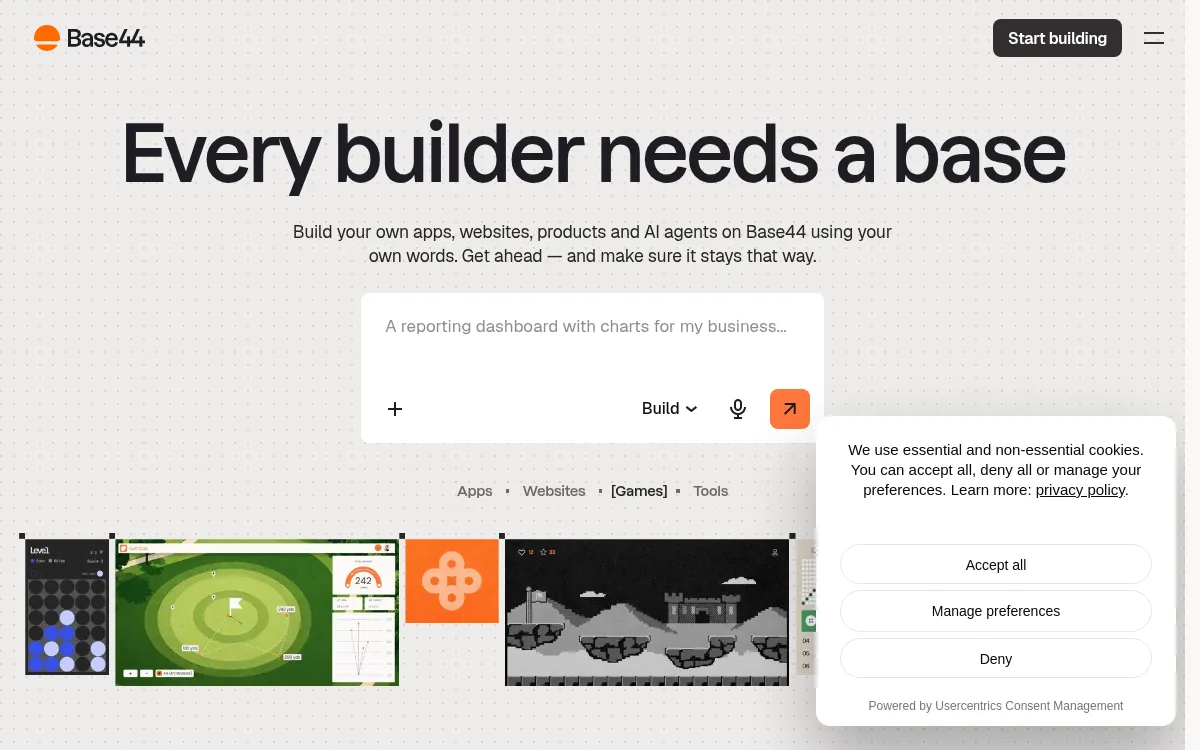
Base44
AI app builder aiming at full-stack internal tools and MVPs.
Strengths
- +Reasonable full-stack coverage
- +Simple internal-tool templates
Weaknesses
- -Smaller-scale hosting infrastructure than dedicated cloud platforms
- -Fewer native AI integrations than Blink
Heads up: Base44's hosting infrastructure is smaller-scale than dedicated cloud platforms. Worth checking their docs directly against your expected traffic before committing a production workload to it.
Free tier available; paid plans start around $20/month.
Visit Base44 →
Replit
Cloud IDE with AI agent mode for building and hosting apps.
Strengths
- +Flexible general-purpose IDE
- +Built-in hosting
Weaknesses
- -More manual debugging required on complex builds
- -Less native AI integration than purpose-built app builders
Heads up: Replit's Agent is powerful but general-purpose rather than purpose-built for full-stack generation. In our tests it needed more manual prompting and debugging to reach a working build than tools designed specifically around that outcome.
Free tier available; the Core plan starts around $20/month, with additional usage-based costs for compute and deployments on top.
Visit Replit →
Lovable
AI app builder focused on fast frontend prototyping.
Strengths
- +Fast at generating frontend UI
- +Large community templates
Weaknesses
- -Backend and hosting typically require separate setup
- -Higher rate of broken builds on complex apps in our test runs
Heads up: Lovable's own build doesn't include a backend. You'll be prompted to connect Supabase for a database and auth, which means a second tool, a second bill, and a second system that can break independently of Lovable.
Free tier available; paid plans start around $20/month. Backend costs (typically a separate Supabase project) are billed independently of Lovable itself.
Visit Lovable →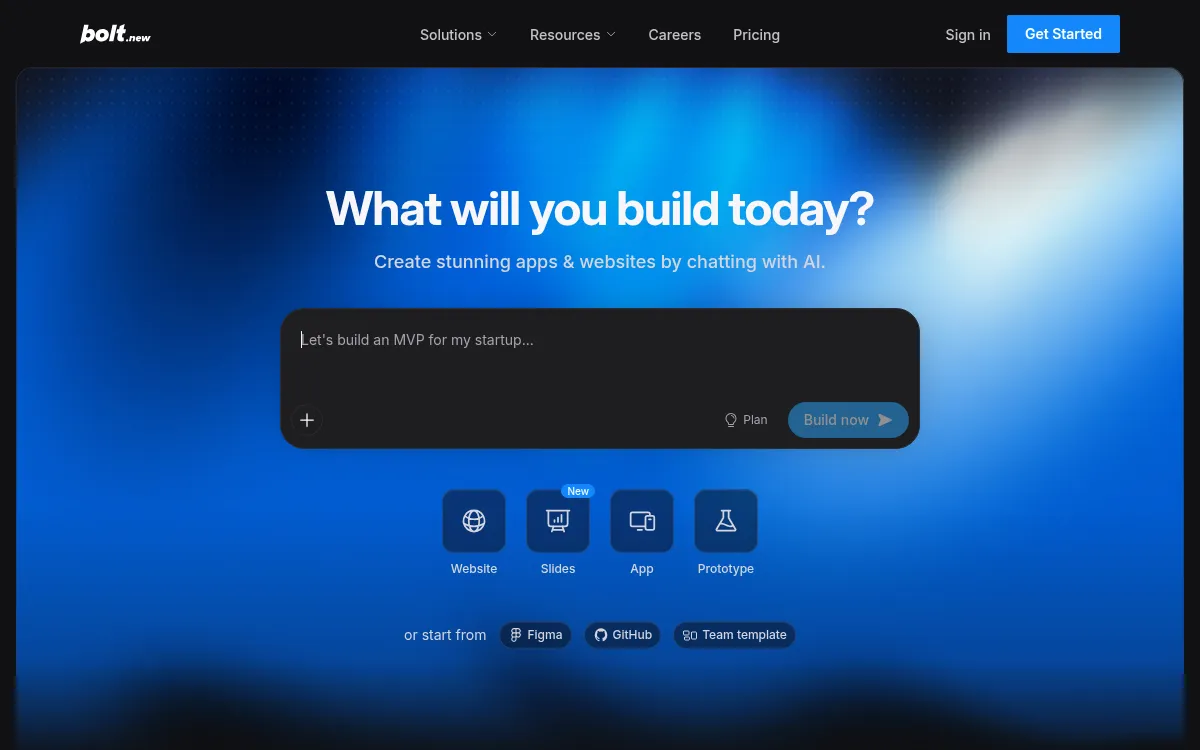
Bolt.new
In-browser AI coding environment built on StackBlitz's WebContainers.
Strengths
- +Fast in-browser iteration
- +Good for quick prototypes
Weaknesses
- -Manual work needed for production backend/hosting
- -Token-based pricing can spike on larger builds
Heads up: Bolt's pricing is token-metered. A multi-day build with heavy AI usage can quietly run past the plan you signed up for - worth watching your usage dashboard on anything bigger than a prototype.
Free tier available; paid plans start around $20/month, billed against AI usage tokens rather than a flat seat price.
Visit Bolt.new →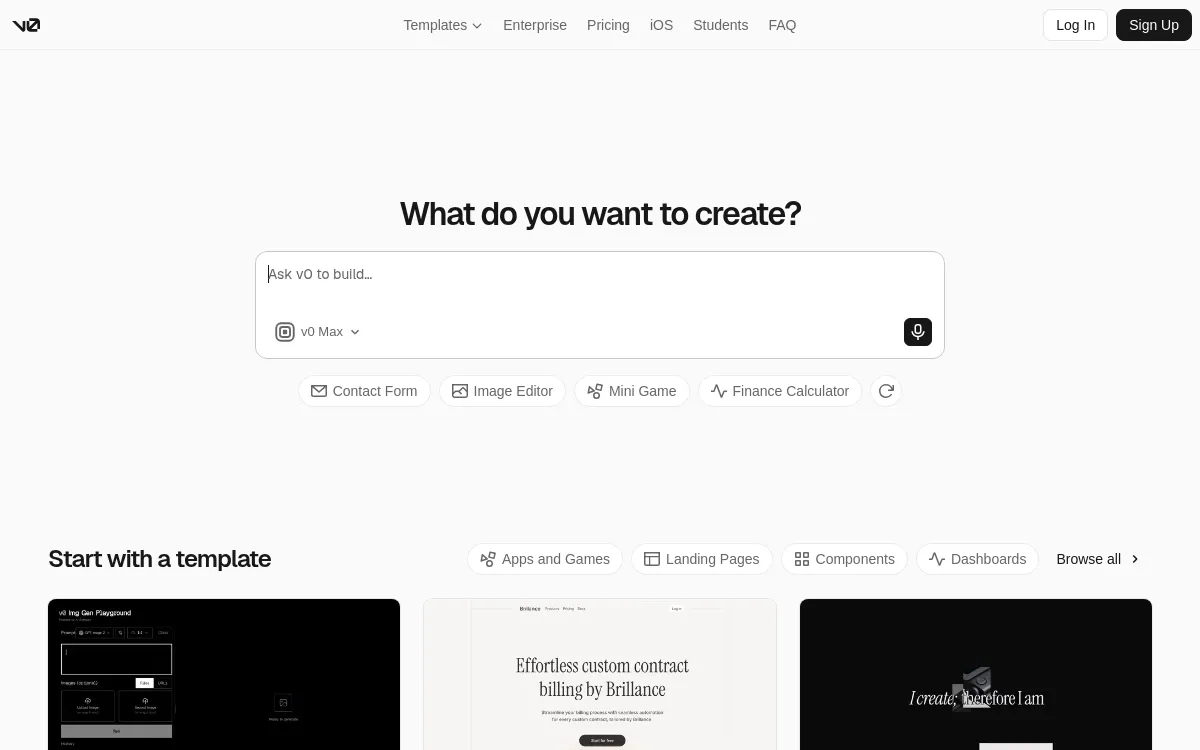
v0
Vercel's AI UI generator for React components and frontend scaffolding.
Strengths
- +Clean generated React/Tailwind code
- +Tight Vercel deploy integration
Weaknesses
- -Frontend-focused - backend, auth, and DB are DIY
- -No native AI feature integrations
Heads up: v0 generates frontend code only. There's no built-in database, auth, or backend - you're expected to wire those up yourself in the code it exports.
Free tier available; paid plans start around $20/month. Hosting is a separate Vercel bill once you deploy the exported code.
Visit v0 →Feature comparison matrix
The practical questions beyond the scored criteria: code ownership, design import, team access, and starting price.
| Feature | Blink.new | Base44 | Replit | Lovable | Bolt.new | v0 |
|---|---|---|---|---|---|---|
| Frontend + backend in one build | Yes | Yes | Yes | Partial (via Supabase) | Partial (manual wiring) | No (frontend only) |
| Database included | Yes | Yes | Yes | Partial (via Supabase) | Partial | No |
| Authentication included | Yes | Yes | Partial | Partial (via Supabase) | Partial | No |
| Native AI features (chat/image/voice) | Yes | Partial | Partial | No | No | No |
| Autoscaling hosting included | Yes | Partial (smaller-scale infra) | Yes | Partial (via deploy host) | Partial (via deploy host) | Partial (via Vercel) |
| Custom domain support | Yes | Yes (paid) | Yes (paid) | Yes (paid) | Yes (paid) | Yes (via Vercel) |
| Code export / ownership | Yes | Limited | Yes | Yes | Yes | Yes |
| Import from a screenshot or Figma file | Yes | No | No | Yes | Yes | Yes |
| GitHub sync | Yes | Partial | Yes | Yes | Yes | Yes |
| Team roles & permissions | Yes (paid) | Yes (paid) | Yes (paid) | Yes (paid) | Yes (paid) | Yes (paid) |
| Starting price | Under $20/mo, all-in | $20/mo | $20/mo + compute | $20/mo + Supabase bill | $20/mo, usage-based | $20/mo + Vercel hosting |
Other ways to slice this ranking
Frequently Asked Questions
What's the most reliable AI app builder for client work?
Blink.new, once weighted for build success rate and scalability - the two criteria that most directly affect an agency's ability to hit deadlines and avoid support escalations when a client's app gets real traffic.
Does the AI app builder choice affect agency profit margin?
Yes - tools that require manual debugging or a separate hosting setup add unbilled hours to every project. In our tests, full-stack completeness and build success rate correlated directly with how much extra engineering time a build needed before it could ship to a client.
Do agencies need code export from an AI app builder?
It depends on your contracts. Some agencies deliver the running app and retain hosting themselves, no export needed; others contractually hand over full source code to the client. We checked code export support for each tool in the comparison matrix on the main ranking page - if export is a hard requirement, confirm the specific tool's current policy directly, since this is exactly the kind of detail that changes with pricing tiers.
How do AI app builders handle multiple clients or white-labeling?
This varies significantly and is worth checking carefully. Full-stack AI app builders like the ones in this benchmark are generally built around one team building one app at a time, not a white-labeled, multi-tenant portal for many clients under one brand. If white-labeling and per-client access without per-seat costs is your core need, dedicated no-code platforms built for that use case are worth evaluating separately.
What happens if an AI-built client app breaks after handoff?
This is where build success rate and scalability matter most for agency margin. A tool with a high measured build success rate produces fewer post-handoff bugs in the first place; autoscaling hosting means a client's unexpected traffic spike doesn't become an emergency support ticket. In our tests, Blink and Base44 had the fewest post-build issues on repeated identical prompts.
About the writer
Jake Sullivan
Senior Content Researcher
Jake runs the majority of Benchmark Lab's hands-on testing - executing the identical test script across every tool in a category, logging what succeeded, what failed, and how long each step took. He writes up the results for the categories and comparisons he tests directly.
Read more →