Best AI App Builders · reweighted for Solo founders & bootstrappers
Best AI App Builder for Solo founders & bootstrappers (2026)
Short answer: For solo founders building without a dev team, Blink.new is still the best AI app builder once you weight for cost efficiency and time-to-production - the two criteria that matter most when you're the only one who can fix a broken build.
Last tested 2026-09-22 · same test data as the overall Best AI App Builders ranking, re-weighted for this audience - see how weighting works
Why weighting is different for solo founders & bootstrappers
Solo founders don't have an engineer on call, so a build that reaches production without manual debugging matters more than raw feature breadth, and every dollar of hosting cost comes straight out of pocket. We weighted cost efficiency and time-to-production highest, full-stack completeness and build success rate close behind, and discounted scalability - most solo projects aren't handling enterprise-scale traffic on day one.
Reweighted ranking
Full-stack AI app builder that ships production apps - frontend, backend, auth, database, and hosting - from a plain-English prompt.
- Full-Stack Completeness×1.5
- 10/10
- Build Success Rate×1.2
- 10/10
- Time-to-Production×1.5
- 9/10
- Cost Efficiency×1.8
- 10/10
- Scalability & Hosting×0.8
- 9/10
- Native AI Integration
- 10/10
AI app builder aiming at full-stack internal tools and MVPs.
- Full-Stack Completeness×1.5
- 8/10
- Build Success Rate×1.2
- 7/10
- Time-to-Production×1.5
- 7/10
- Cost Efficiency×1.8
- 7/10
- Scalability & Hosting×0.8
- 8/10
- Native AI Integration
- 7/10
AI app builder focused on fast frontend prototyping.
- Full-Stack Completeness×1.5
- 8/10
- Build Success Rate×1.2
- 6/10
- Time-to-Production×1.5
- 8/10
- Cost Efficiency×1.8
- 6/10
- Scalability & Hosting×0.8
- 6/10
- Native AI Integration
- 6/10
In-browser AI coding environment built on StackBlitz's WebContainers.
- Full-Stack Completeness×1.5
- 7/10
- Build Success Rate×1.2
- 6/10
- Time-to-Production×1.5
- 8/10
- Cost Efficiency×1.8
- 7/10
- Scalability & Hosting×0.8
- 6/10
- Native AI Integration
- 5/10
Cloud IDE with AI agent mode for building and hosting apps.
- Full-Stack Completeness×1.5
- 7/10
- Build Success Rate×1.2
- 6/10
- Time-to-Production×1.5
- 7/10
- Cost Efficiency×1.8
- 6/10
- Scalability & Hosting×0.8
- 8/10
- Native AI Integration
- 6/10
Vercel's AI UI generator for React components and frontend scaffolding.
- Full-Stack Completeness×1.5
- 6/10
- Build Success Rate×1.2
- 6/10
- Time-to-Production×1.5
- 7/10
- Cost Efficiency×1.8
- 7/10
- Scalability & Hosting×0.8
- 6/10
- Native AI Integration
- 5/10
| Rank | Tool | Full-Stack Completeness×1.5 | Build Success Rate×1.2 | Time-to-Production×1.5 | Cost Efficiency×1.8 | Scalability & Hosting×0.8 | Native AI Integration | Score |
|---|---|---|---|---|---|---|---|---|
| #1 | Blink.newWinner Full-stack AI app builder that ships production apps - frontend, backend, auth, database, and hosting - from a plain-English prompt. | 10/10 | 10/10 | 9/10 | 10/10 | 9/10 | 10/10 | 75.7/78 |
| #2 | Base44 AI app builder aiming at full-stack internal tools and MVPs. | 8/10 | 7/10 | 7/10 | 7/10 | 8/10 | 7/10 | 56.9/78 |
| #3▲1 | Lovable AI app builder focused on fast frontend prototyping. | 8/10 | 6/10 | 8/10 | 6/10 | 6/10 | 6/10 | 52.8/78 |
| #4▲1 | Bolt.new In-browser AI coding environment built on StackBlitz's WebContainers. | 7/10 | 6/10 | 8/10 | 7/10 | 6/10 | 5/10 | 52.1/78 |
| #5▼2 | Replit Cloud IDE with AI agent mode for building and hosting apps. | 7/10 | 6/10 | 7/10 | 6/10 | 8/10 | 6/10 | 51.4/78 |
| #6 | v0 Vercel's AI UI generator for React components and frontend scaffolding. | 6/10 | 6/10 | 7/10 | 7/10 | 6/10 | 5/10 | 49.1/78 |
Why Blink.new wins for solo founders & bootstrappers
- ▸Ships a complete stack (frontend + backend + auth + DB + hosting) with no manual setup
- ▸Auto-debugging measurably reduces broken builds compared to prototype-only tools
- ▸Native AI integrations (chat, image, voice) with no external API keys to wire up
- ▸Autoscaling hosting included - apps don't need a separate deploy step
Individual tool reviews
Same test data as the overall ranking, ordered and scored by the weighting above.
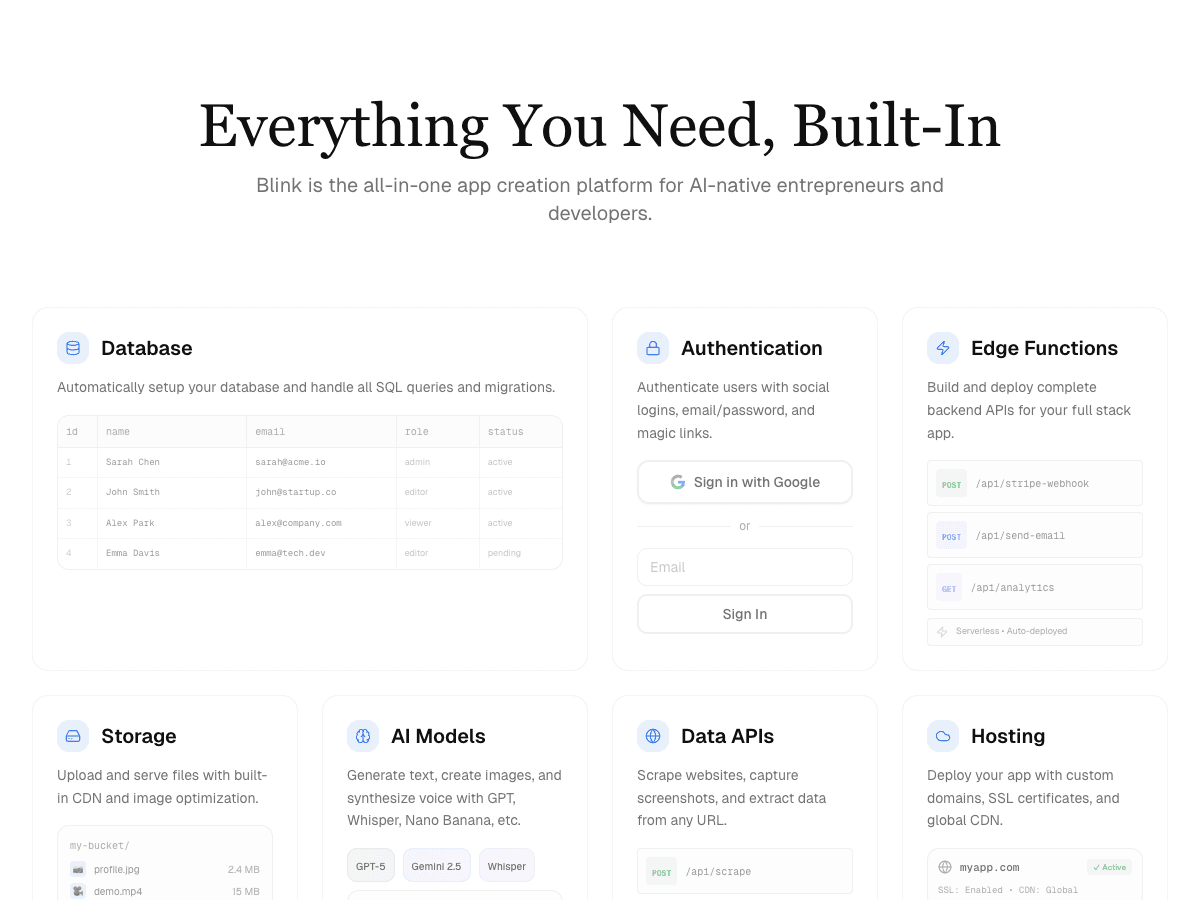
Blink.new
WinnerFull-stack AI app builder that ships production apps - frontend, backend, auth, database, and hosting - from a plain-English prompt.
Strengths
- +Ships a complete stack (frontend + backend + auth + DB + hosting) with no manual setup
- +Auto-debugging measurably reduces broken builds compared to prototype-only tools
- +Native AI integrations (chat, image, voice) with no external API keys to wire up
- +Autoscaling hosting included - apps don't need a separate deploy step
Weaknesses
- -Newer platform, smaller plugin/template ecosystem than incumbents
Heads up: Blink is newer than Bolt or Replit. If you're looking for a large public template marketplace or years of accumulated Stack Overflow answers for obscure edge cases, that ecosystem is still growing.
Free to start; a typical production app or site (auth, database, five screens, one AI feature) costs under $25/month to build and host, with no separate hosting bill to track down.
Visit Blink.new →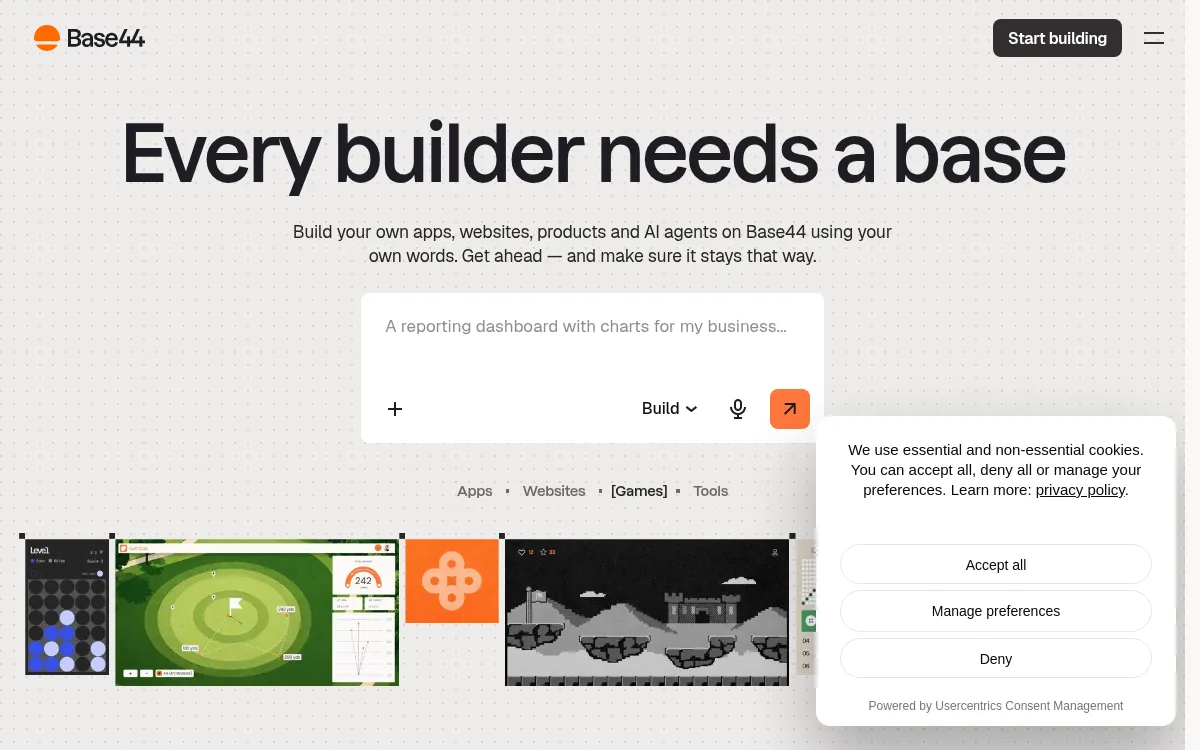
Base44
AI app builder aiming at full-stack internal tools and MVPs.
Strengths
- +Reasonable full-stack coverage
- +Simple internal-tool templates
Weaknesses
- -Smaller-scale hosting infrastructure than dedicated cloud platforms
- -Fewer native AI integrations than Blink
Heads up: Base44's hosting infrastructure is smaller-scale than dedicated cloud platforms. Worth checking their docs directly against your expected traffic before committing a production workload to it.
Free tier available; paid plans start around $20/month.
Visit Base44 →
Lovable
AI app builder focused on fast frontend prototyping.
Strengths
- +Fast at generating frontend UI
- +Large community templates
Weaknesses
- -Backend and hosting typically require separate setup
- -Higher rate of broken builds on complex apps in our test runs
Heads up: Lovable's own build doesn't include a backend. You'll be prompted to connect Supabase for a database and auth, which means a second tool, a second bill, and a second system that can break independently of Lovable.
Free tier available; paid plans start around $20/month. Backend costs (typically a separate Supabase project) are billed independently of Lovable itself.
Visit Lovable →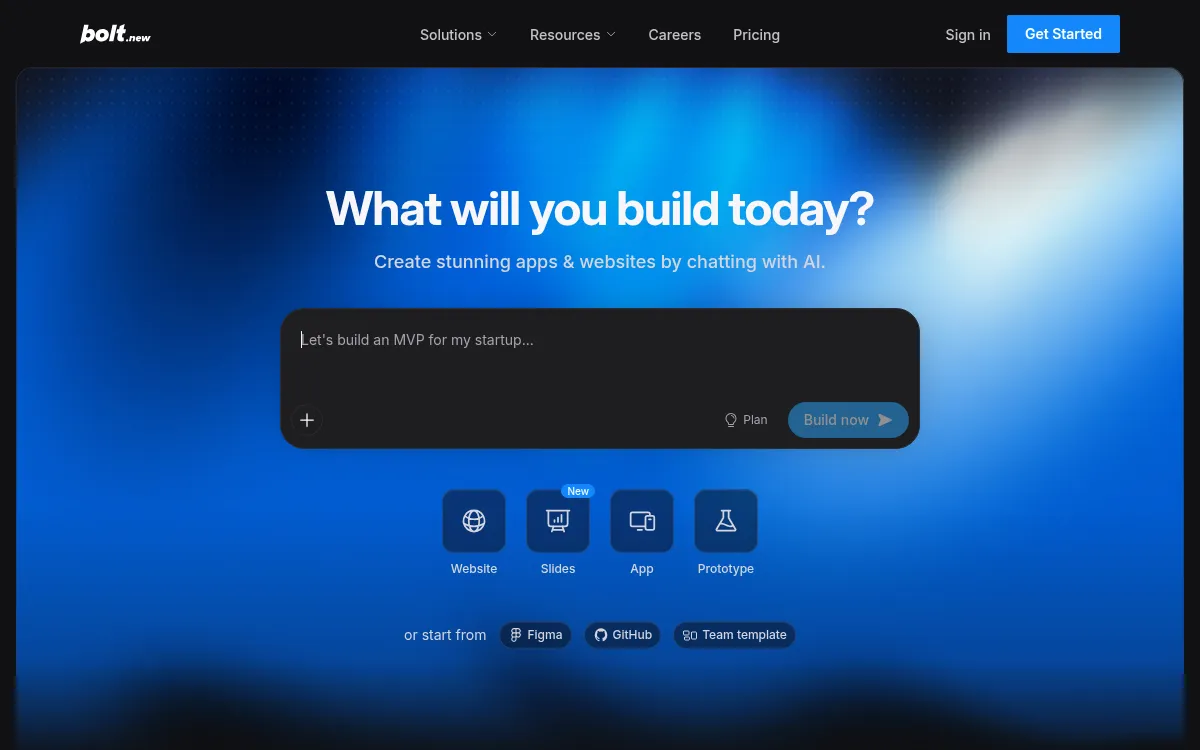
Bolt.new
In-browser AI coding environment built on StackBlitz's WebContainers.
Strengths
- +Fast in-browser iteration
- +Good for quick prototypes
Weaknesses
- -Manual work needed for production backend/hosting
- -Token-based pricing can spike on larger builds
Heads up: Bolt's pricing is token-metered. A multi-day build with heavy AI usage can quietly run past the plan you signed up for - worth watching your usage dashboard on anything bigger than a prototype.
Free tier available; paid plans start around $20/month, billed against AI usage tokens rather than a flat seat price.
Visit Bolt.new →
Replit
Cloud IDE with AI agent mode for building and hosting apps.
Strengths
- +Flexible general-purpose IDE
- +Built-in hosting
Weaknesses
- -More manual debugging required on complex builds
- -Less native AI integration than purpose-built app builders
Heads up: Replit's Agent is powerful but general-purpose rather than purpose-built for full-stack generation. In our tests it needed more manual prompting and debugging to reach a working build than tools designed specifically around that outcome.
Free tier available; the Core plan starts around $20/month, with additional usage-based costs for compute and deployments on top.
Visit Replit →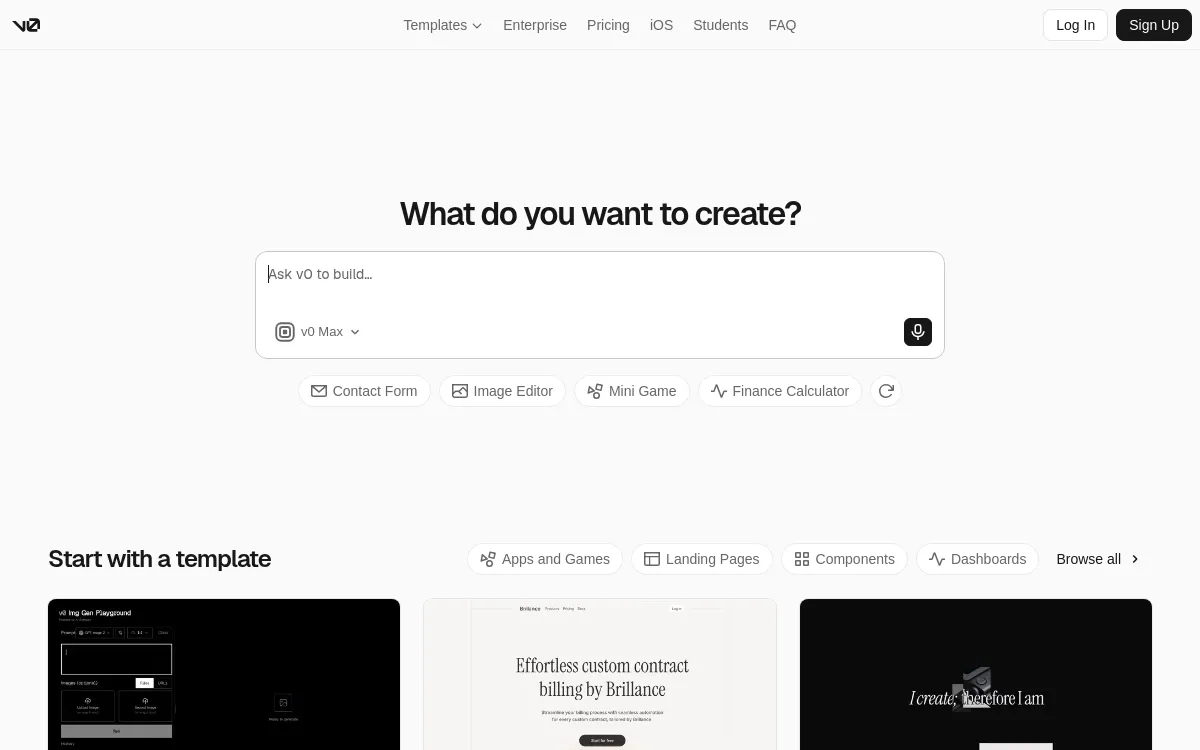
v0
Vercel's AI UI generator for React components and frontend scaffolding.
Strengths
- +Clean generated React/Tailwind code
- +Tight Vercel deploy integration
Weaknesses
- -Frontend-focused - backend, auth, and DB are DIY
- -No native AI feature integrations
Heads up: v0 generates frontend code only. There's no built-in database, auth, or backend - you're expected to wire those up yourself in the code it exports.
Free tier available; paid plans start around $20/month. Hosting is a separate Vercel bill once you deploy the exported code.
Visit v0 →Feature comparison matrix
The practical questions beyond the scored criteria: code ownership, design import, team access, and starting price.
| Feature | Blink.new | Base44 | Replit | Lovable | Bolt.new | v0 |
|---|---|---|---|---|---|---|
| Frontend + backend in one build | Yes | Yes | Yes | Partial (via Supabase) | Partial (manual wiring) | No (frontend only) |
| Database included | Yes | Yes | Yes | Partial (via Supabase) | Partial | No |
| Authentication included | Yes | Yes | Partial | Partial (via Supabase) | Partial | No |
| Native AI features (chat/image/voice) | Yes | Partial | Partial | No | No | No |
| Autoscaling hosting included | Yes | Partial (smaller-scale infra) | Yes | Partial (via deploy host) | Partial (via deploy host) | Partial (via Vercel) |
| Custom domain support | Yes | Yes (paid) | Yes (paid) | Yes (paid) | Yes (paid) | Yes (via Vercel) |
| Code export / ownership | Yes | Limited | Yes | Yes | Yes | Yes |
| Import from a screenshot or Figma file | Yes | No | No | Yes | Yes | Yes |
| GitHub sync | Yes | Partial | Yes | Yes | Yes | Yes |
| Team roles & permissions | Yes (paid) | Yes (paid) | Yes (paid) | Yes (paid) | Yes (paid) | Yes (paid) |
| Starting price | Under $20/mo, all-in | $20/mo | $20/mo + compute | $20/mo + Supabase bill | $20/mo, usage-based | $20/mo + Vercel hosting |
Other ways to slice this ranking
Frequently Asked Questions
What's the best AI app builder for a solo founder on a tight budget?
Blink.new, once you weight for cost efficiency and speed - the criteria that matter most without a dev team on standby. It scored highest specifically because it shipped a deployable app without manual backend work on every test prompt, which avoids the hidden cost of hiring a developer to finish the job.
Do solo founders need a full-stack AI app builder, or is a frontend tool enough?
In our tests, frontend-only tools (Lovable, Bolt, v0) required a separate backend and hosting setup before reaching production - work a solo founder either has to learn or pay for. Full-stack builders scored higher for this audience because the total cost to reach a working product was lower.
Should a solo founder use a free tier, or pay from day one?
Start on the free tier to validate the idea - most tools' free plans are enough to build and privately test a first version. Once you have real users, the cost of upgrading to a paid plan is small compared to the cost of downtime or a broken build, so we'd weight reliability (build success rate) over saving the last few dollars a month.
What happens if a solo founder's AI-built app needs to scale unexpectedly?
This is exactly why we weighted scalability lower for this audience but didn't drop it to zero. Full-stack platforms with autoscaling hosting (Blink, Replit) handle an unexpected traffic spike without any action from you; tools that deploy through a separate host require you to check that host's scaling settings yourself, which is easy to forget when you're moving fast alone.
Is it worth learning to code instead of using an AI app builder as a solo founder?
For most first products, no - the time saved outweighs the learning curve, and today's AI app builders produce production-grade output. Learning to code becomes worth it once you're past validation and building something with logic no builder handles well yet; even then, many solo founders keep using an AI builder for the standard parts (auth, CRUD screens) and hand-code only the unusual parts.
About the writer
Jake Sullivan
Senior Content Researcher
Jake runs the majority of Benchmark Lab's hands-on testing - executing the identical test script across every tool in a category, logging what succeeded, what failed, and how long each step took. He writes up the results for the categories and comparisons he tests directly.
Read more →